
Foraging Theory Applied to Medical Information Searching
by
Book Cover & Preview Text
Formats

Book Details
About the Book
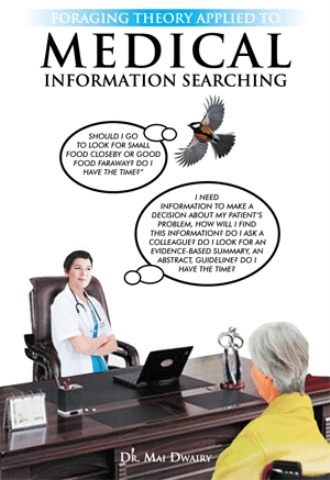
Workload and other constraints prevent General Practitioners from accessing medical evidence for clinical decisions. This problem was studied in New Zealand GPs using Optimal Foraging Theory developed in ecology. GPs’ information search strategies were modelled as sequential steps associated with costs and benefits measured from logbooks of actual searches. By consulting the most profitable sources, switching sources when unsuccessful, and double checking, GPs seem close to an optimal trade-off between maximizing search success and information reliability, and minimizing searching time. Subsidised training in information searching and provision of a literature search service are two inferred avenues to access medical evidence.
About the Author
Mai Dwairy was, born in Nazareth, Israel. Mai always had a critical mind, questioning the reliability of information. In 1999, she immigrated to Wellington, New Zealand, joining the Evidence-based Healthcare advisory team at the Accident Compensation Corporation. In 2005, she was an invited researcher at the New Zealand Guideline Group. At that time, she enrolled in a PhD at the Wellington School of Medicine, Otago University, on the topic “The application of foraging theory to the management of information by General Practitioners”. Mai was the first to apply foraging theory, developed in behavioural ecology, to a medical information search setting.