
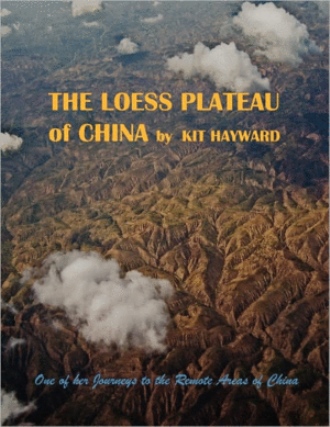
The Loess Plateau of China
One of her Journeys to the Remote Areas of China
by
Book Cover & Preview Text
Formats


Book Details
About the Book
A photographic journal of the Loess Plateau in the northern Shaanxi of China as seen by the author in 2008, this book is about one of the “Remote China” travels the author undertook in recent years when China has achieved high economic growth and set a new tone for Chinese Communism.
Contains over 330 images of the landscape, the people and its habitat, the book highlights the evolution of the modern day life from primitive villages of cave dwellings at ancient times and the remains of the traditional Ming and Ching dynasty architecture and craftsmanship during a period of prosperity in the 17th & 18th centuries. The ingenuity of adopting the traditional Chinese architecture to the difficult topography of the Loess Plateau is clearly demonstrated in the book.
Images of old family estates, small vanishing villages to larger towns and cities were shot from nine locations: Mizhi, Yangjiagou, Chang’s Fazenda. Gausigou, Jian Jia Da Yuan, Wubu, Qikou, Lijiashan and Yan’an. Some of these locations are particularly relevant to the communist Red Revolution during the period of 1934 to 1948 before the new People’s Republic of China was born. Mao Zedong and other Communist Party leaders lived in 37 of the cave dwellings in some of these villages until they crossed the Yellow River from Wubu in 1948 and won the revolution in 1949.
The images document the transformed Gousigou, a village on the plateau, from a harsh and barren environment to a thriving village. They also capture how life changes when links between town and country are available.
Sensitised by emotion, the images reflected the dramatic changes in some traditional culture and customs. The revolutionary Waist Drum Dance and the traditional Moon Festival celebration are disappearing. The images show that the practice of the modern Harvest Dance although departs from it’s original purpose, is enjoyed by the public at large.
Traces of the past hardships are left on the older faces despite improvement of their life in later years. They are seen to have discarded the little Red Book, but are still hanging on with their Mao suits. Embracing consumerism, just a few steps behind, the young appears not dissimilar with those of the western world. This book contains over 100 images of a wide range of ordinary people getting on with their life in September 2008.
The book gives an insight to the flux of change in China, specifically, the once remote area of the Loess Plateau.