
Society:The Invisible Giant
by
Book Cover & Preview Text

Formats

Book Details
About the Book
Society: The Invisible Giant defines society as the association of persons motivated by their urgent desires for life and happiness to interact with their environment. This book is not an introduction to sociology; it is a thesis drawn from over fifty years of author Warren K. Eister’s experience since its correlations as a biochemical system result in unique views of society that may be seen as propositions. It provides a snapshot of the very dynamic complex society now serving the world’s projected ten billion human beings with strong inherited individual desires for life and happiness.
While other books address limited aspects of this invisible giant, Society: The Invisible Giant traces back to six million years ago when human society included the person, family and tribe. It reveals that through the economic eras of gathering, agrarian and industry, tribes evolved into bureaucracies essential today to the survival of persons.
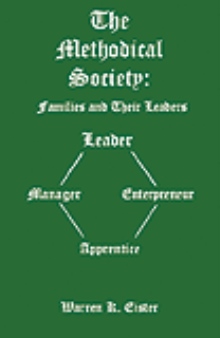
Society is a very complex biochemical system. Within the families, each member has always played all the roles of leaders, managers, apprentices and entrepreneurs. General audiences will find this book very useful in understanding society.
About the Author
Warren Eister grew up in Sunbury, Pennsylvania and received a chemical engineering degree from Bucknell University in 1940. While employed by Dupont at what became the Oak Ridge National Laboratory, he was involved in the development of plutonium production, a chemical element not in his college text books. In 1984 he retired from the Department of Energy where he was involved in the development of plutonium waste disposal. During that time he managed technology development for many nuclear applications for several corporations and government agencies. When he retired he proposed to teach an introduction to management for engineers, which evolved into this introduction to the methodical society for high school students. This evolution resulted from applying the methodical approach of engineering that transforms science into technology of benefit to society.