
Medical, Genetic & Behavioral Risk Factors of Birman Cats
by
Book Cover & Preview Text
Formats







Book Details
About the Book
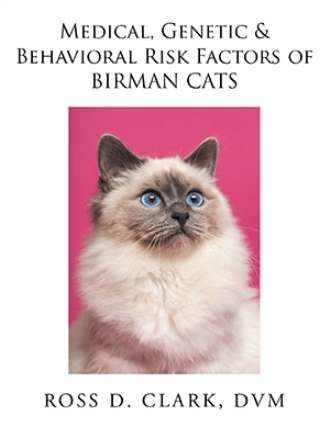
The Birman’s origin is very unique and mysterious. It is said that the breed came about as the result of a miracle in Burma where the animal was considered sacred. The legend is that at the temple of Lao-Tsun, where a statue of the golden goddess Tsun-Kyan-Kse was kept along with one hundred white cats, an old priest, Mun-Ha, was killed by attackers. At the moment of his death, Mun-Ha’s companion cat, Sinh, a white cat with amber eyes, immediately jumped on the priest and faced the goddess. As the cat did this, it is said that the priest’s soul entered the cat because the cat’s hair turned golden and its eyes became the same color blue as the goddess. The legs, face, and tail turned brown as the earth, except for the feet, which, resting on the priest, remained white. In seven days, Sinh died carrying the soul of Mun-Ha to paradise. The next day, all the other cats made the same transformation, which led the priests to regard them as sacred. How this breed came to be around in the world is just as puzzling. It is believed that in 1919, two Birmans were shipped from Burma to France. Although only the pregnant female survived, this was enough to establish this breed across the world. The name comes from the French word for Burma, Birmanie. In 2014, the Birman was the fifteenth most popular long-haired cat according to CFA registration statistics.
About the Author
Ross D. Clark, DVM is the founder of Woodland PetCare Centers and a cofounder of National PetCare Centers. He received his doctor of veterinary medicine degree in 1963 from Kansas State University. He is practice management editor for Veterinary Economics Magazine and served as president of the Tulsa County Veterinary Medical Association, the Oklahoma Veterinary Medical Association, and also as president of the Western Veterinary Conference—the world’s largest continuing education conference for veterinarians. American Animal Hospital Association named him Outstanding Practitioner for the Western Region in 1987 and National Merit Award Winner in Toronto, Ontario, Canada, in 1991. Veterinary Partners Incorporated, an organization of veterinarians, lawyers, and accountants that do practice management consulting, recognized Dr. Clark with their prestigious Pioneer Award at the Western Veterinary Conference in 2004. He served two terms as president of Kansas State University Veterinary Medical Alumni Association from 1990 to 1992, and Kansas State University named him an alumni fellow in February of 2003. Over the past forty-five years, Dr. Clark and his partners have cared for show dogs from most states in the United States of America, plus show dogs from Canada, Mexico, and Spain. He is the author of eight books, including Medical, Genetic, and Behavioral Aspects of Purebred Cats and the coauthor of the first and second edition of Medical and Genetic Aspects of Purebred Dogs. He is also author of four management books: first, a practice management manual; second, The Best of Ross Clark; third, Mastering the Marketplace—Taking Your Practice to the Top; and his latest book, Open Book Management for Veterinary Hospital Teams. He has toured throughout the world as a practice management lecturer and consultant. In addition, Dr. Clark has been a Veterinary Economics “Hospital of the Year” judge for over twenty-eight years. Dr. Clark is currently owner and managing partner of four small animal practices and three pet resorts in Oklahoma. Dr. Clark and his team have been doing veterinary practice management consultation, seminars, and appraisals since 1981. Ross is married to Linda Clark, and they have two children, twins Kent and Kimberly Clark.