
LABOR INTENSIVE
A Nurses's Journal
by
Book Cover & Preview Text
“I knew that my words were like pouring gasoline on an open flame for this man.” July 31 A human dilemma occurred tonight, and as usual, I wanted so much to jump in and solve the problem for my patient. I met a father in the mother-baby assessment room, a handsome Latino with red eyes and obvious alcohol on his breath. Once in a while, a prospective dad will spend the period of his wife’s labor by conducting a pre-birth celebration, and this man was a bit tipsy. He was behaving himself, just, and was encouraging every passerby to admire his infant. Later, I was making a bed in the hallway while this couple was visiting, waiting for the nursing assistant to take the new mom and baby up to her room on the postpartum floor. The husband called me over, and in fairly good English asked me to help. “Excuse me, but does my esposa sign the papers for the operation for no mas babies?” With sinking heart, I accepted this woman’s chart as he handed it to me. He had likely pulled it from its resting place, tucked under the foot of the stretcher’s mattress. He was not entitled to go into her medical record, but I could imagine he felt every right to do so. I started paging through her chart, giving me a moment to try and think how to handle this touchy situation. Indeed, she had signed the consent for permanent sterilization, and would be set up for this minor surgical procedure later this day or sometime before her discharge. This document verified the mother’s having attended the mandatory class we provide to inform women about all the ins-and-outs of the procedure to prevent future pregnancies. As I continued my look into the new mother’s personal information, I learned that this patient was a twenty-nine-year-old woman who had just delivered her sixth child. Amazing. She looked to be no more than nineteen. I hadn’t answered the new father’s question because, truly, he was not entitled to this confidential information. I suppose the conflict in my expression gave him the answer he was seeking. “Well, I’m telling you that I no give my permiso for the operación,” he shouted belligerently at me. Maintaining a neutral tone and calm expression, I explained that only the patient can consent to, or refuse treatment. We would have to be guided by his wife’s wishes. Oh, God. As quiet and non-inflammatory as they were spoken, I knew that my words were like pouring gasoline on an open flame for this man. In the Latino culture, the male is the absolute king of the castle, even if the castle is a modest one-room apartment in the barrio. Next, the belligerant husband pointed his finger at me and announced angrily: “Entonces, she will tell you right now, she no want the operación!” I looked at the slender, pretty woman in the bed, staring at us with a wooden expression. Who knew what exactly she made of all this, for she purported not to speak any English. Many times, while they are too shy to use their broken English in front of a strange group of medical gringos, I have found that my Spanish-speaking patients understand quite a bit of our language. This woman seemed to have decided to remain studiously passive, as if she was indifferent to what was transpiring between her husband and me. I guessed that this conflict, playing out in our hallway, was an echo of a difficult conversation that had taken place between this man and wife sometime in the recent past. And yet she had signed up for the sterilization class despite her spouse’s objection. Our conversation continued with our new father prodding his wife to tell me she didn’t want the tubal. In the end, she nodded her head and said the words he was demanding. I appealed to his sense of compassion. “Can’t you try to see this from her viewpoint?” I asked gently. “Six babies before age thirty are so many for you and your wife to care for.” He was unmoved by my words, and reiterated with arms crossed on his chest that, “Si, but she no gonna have the operación.” I knew there was virtually nothing to be done. I asked the senior resident, one of the most decent men I have ever met, to intercede. Jaime Bautista confirmed what in my heart I already knew: that we simply could not interfere in what was strictly a family decision. I suggested we write for a social worker visit. Once she was upstairs, someone could come and expend what effort was possible to lend support to this gutsy young woman who was trying to limit her expanding family. Part of this support would be to explain the various ways she could prevent future pregnancies with the array of contraceptive choices at her disposal. I was realistic enough to believe that there was every chance we would be seeing her in this unit within the next few years. All this made me nearly sick. I constantly have to remind myself that we can only scratch the surface when it comes to meeting the many needs of this population we serve. Who knows what the day-to-day trials of these poor immigrant women are? I could appreciate a smidgen of this woman’s ordeal, being myself one of nine siblings in a big Catholic family. My parents loved all of us, but their ability to meet the emotional and physical needs of myself and my younger brothers and sisters was diluted with each new mouth to feed. This Mexican wife, in the face of a culture and religion that denies her the right to realistically contain the size of her family, had made a brave decision. Would that events had proceeded differently. For myself, I strained once more to let go of those things over which I have no control.
Formats

Book Details
About the Book
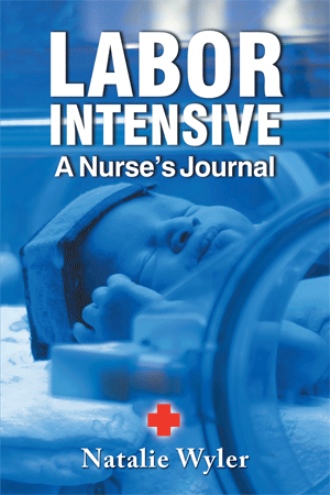
This true-to-life journal encompasses two years in the author’s early nursing career spent working side-by-side with physicians-in-training as part of their residency program in Women’s Health. The setting is a high-risk obstetrics unit at a large metropolitan hospital serving the city’s poor and immigrant women and their infants. Doctors and nurses are described responding to an array of emergencies and a crushing workload in this labor-intensive setting. The medical situations are eye openers—the interpersonal dynamics even more so. There are plenty of ethical dilemmas to traverse for the staff, and a measure of humor to leaven the stark circumstances. The work also describes the personal journey of the author as she morphs from a shy and insecure new nurse to a strong and assertive person able to act on behalf of patients who are in a highly vulnerable position.
About the Author
Madeleine Weiller has spent 30 years working in the field of Women’s Health as a nurse and midwife. She entered her healthcare career after having previously attained a degree in English, and retained her lifelong love of storytelling and writing. She found that her personal mission was working with poor and underserved patients who had very few options for their childbearing experience. This population served up many difficult moments for their caregivers, as they experienced complicated health and pregnancy problems that tested the team’s knowledge and skills at every turn. The author managed to preserve her vision of the heart of such work, a woman struggling to cope in one of life’s most challenging moments.