
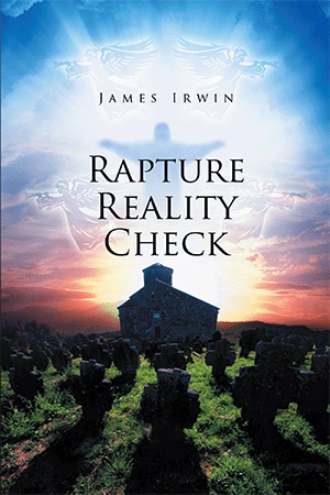
Rapture Reality Check
by
Book Cover & Preview Text
The rapture, since it includes living and dead saints, requires an associated resurrection of the dead saints. The resurrections of the saints are mentioned in John 6 and 1 Corinthians 15. There is no pretribulational resurrection of the righteous saints. Jesus says four times in John 6 that on the “last day” he will raise everyone who believes in him. Consequently, there can be no pretribulational rapture. The clearest teaching on the rapture of the church is found in Paul’s epistles to the Thessalonians. Paul taught the church would be raptured on the day of the Lord and that the wicked would be destroyed the very same day. Paul’s teaching is consistent with the examples of Noah and Lot and the end-time parables of Jesus. The wicked are slain at the time of separation of the wicked and the righteous. The wicked being slain at the time of separation is a key point. The Antichrist does not reign on earth after the rapture of the church. Instead, the Antichrist is destroyed at the rapture. The “left behind” scenario is nonsense in light of scripture. The millennial kingdom is established on the day of the rapture. The destruction of the wicked on the same day the church is raptured is discussed in Revelation 19–20. Jesus heads to earth for his wedding supper. On the way, Jesus destroys the armies gathered at Armageddon, destroys the Antichrist and the false prophet, tramples the grapes of wrath, and sets up the millennial kingdom. The millennial kingdom is set up the day the church is raptured. This points out what is wrong with the pretribulational rapture theory. This age ends and the age to come begins at the rapture of the church. It is more than Christians who are freed from the curse of the law at the rapture of the church; all nature is freed from the curse of the law at the rapture. Romans 8:19–23 (TLB) For all creation is waiting patiently and hopefully for that future day when God will resurrect his children. For on that day thorns and thistles, sin, death, and decay—the things that overcame the world against its will at God’s command—will all disappear, and the world around us will share in the glorious freedom from sin which God’s children enjoy. For we know that even the things of nature, like animals and plants, suffer in sickness and death as they await this great event. And even we Christians, although we have the Holy Spirit within us as a foretaste of future glory, also groan to be released from pain and suffering. We, too, wait anxiously for that day when God will give us our full rights as his children, including the new bodies he has promised us—bodies that will never be sick again and will never die. The curse of the law ends at the rapture of the church, which is when the millennial kingdom is established. This is why a pretribulational rapture is totally impossible. Pretribulationalists confuse wrath and tribulation. The difference is the source. The source of the wrath of God is God himself. God is angry with a Christ-rejecting world. The tribulation is the pressure that Satan, using the world, brings against the church. The wrath of God begins when the sixth seal is opened (as mentioned in Revelation). In the interim between the sixth seal and the seventh seal, before any damage is done to the earth, the saints are sealed for their protection. The intense persecution of the saints in the great tribulation happens when the fifth seal is opened. The fifth seal is opened before God’s wrath starts at the opening of the sixth seal. I challenge a pretribulationalist to point out just one scripture that proves that the church will be exempt from the persecution that will arise after the fifth seal is opened, prior to the wrath of God. The Bible says that Jesus was crucified on Preparation Day (Nisan 14) and that the following day was a special Sabbath (Nisan 15). Most people assume that the special Sabbath was a Saturday and, consequently, that Jesus was crucified on a Friday. This is not necessarily the case. Nisan 15 is just a day of the Hebrew calendar, whose weekdays change every year. When the Bible is examined carefully, it shows that Jesus was crucified on a Wednesday. (See the book Good Wednesday by James Irwin.) The author examines Daniel’s seventy weeks (Daniel 9:24–27) by considering three potential starting points for the prophecy. These three points are the decree of Cyrus in 536 BC, the decree of Artaxerxes to Ezra in 457 BC, and the decree of Artaxerxes to Nehemiah in 445 BC. The decree of Cyrus is just too early, because Jesus is born much later than 490 afterwards. The decree of Artaxerxes to Ezra works for supporting the historical position that Jesus was crucified in the middle of Daniel’s seventieth week. Daniel’s seventy weeks run from 457 BC to AD 33. Jesus was crucified in AD 30, the middle of the seventieth week. The daylight hours of Preparation Day fell on a Wednesday in AD 30. The next potential starting date is the decree of Artaxerxes to Nehemiah in 445 BC. We will refute the work of pretribulationalist Robert Anderson using a prophetic year of 360 days. Anderson concludes that Jesus was crucified in AD 32. The daylight hours of Preparation Day were on a Monday in AD 32. Jesus could not have been crucified on a Monday. Robert Anderson has the wrong year, so we reject his work. The only starting point that works is the time of the decree of Artaxerxes to Ezra in 457 BC. Daniel’s seventy weeks are history. The New Testament does not mention Daniel’s seventy weeks, nor does it mention a treaty between the Antichrist and Israel. And it is impossible to have a future Daniel’s seventieth week after the rapture of the church. The millennial kingdom is set up the day the church is raptured.
Formats

Book Details
About the Book
The book is about the pretribulational rapture theory. The book is written by a person that at one time believed the pretribulational rapture theory. The author noticed scriptural problems with the pretribulational rapture theory as time went by. The author presents a biblical view of the rapture by presenting the scriptures on the subject. At the end of each chapter, the author asks questions about the scriptures presented. In particular, the author asks questions about the scriptures that caused him to reject the pretribulational rapture theory. At the end of each chapter, there are pages for notes. The reader can write his answers to the questions. The questions are designed to make the reader think about the scriptural basis for his views. This is why the title of the book is Rapture Reality Check.
About the Author
The author is a retired computer programmer. The author received the new birth in 1983. Soon afterwards the author joined a Pentecostal church that taught the pretribulational rapture theory. The author originally believed the pretribulational rapture theory. After some time, the author noticed scriptural issues with the pretribulational rapture theory. The pretribulational rapture theory did not jibe with the word of God. The author accepted the word of God and rejected the pretribulational rapture theory. The author’s reasons for rejecting the pretribulational rapture theory are given in this book.