
Detach from Drama
From Reactivity to Resilience
by
Book Cover & Preview Text
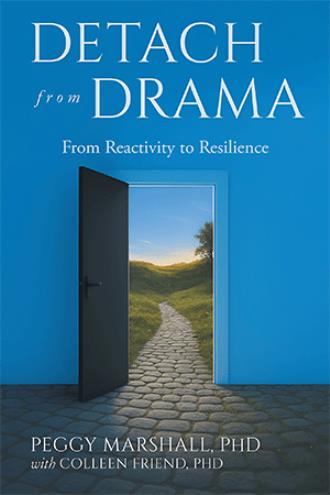
Defining Drama: Understanding Emotional Exaggeration We’ve all said it or at least thought it: “I’m so tired of the drama.” But what exactly is drama in the context of everyday life? What makes one situation feel charged and chaotic, while another just as difficult feels manageable? Drama, at its core, is not about hardship itself. Life is full of legitimate stressors grief, disappointment, conflict, uncertainty. These are real, human experiences that deserve attention and care. But drama is what happens when emotion becomes inflated, stories become distorted, and resolution takes a back seat to reaction. It often starts subtly: a raised voice here, a spiraling story there, a lingering sense of injustice that keeps the same situation on repeat. What separates drama from difficulty is its stickiness, pulls people in, keeps them there, and feeds on attention, validation, or control. Drama isn’t always loud. Sometimes it’s whispered through resentment, cloaked in gossip, or disguised as helpful venting. But at its root, drama tends to share these common characteristics: 1. It exists on a continuum. Not all drama looks the same, some of it is fleeting and harmless; some of it is entrenched and toxic. What matters is not how loud it is, but how often it repeats and how deeply it entangles. 2. It thrives on engagement. Drama requires participation. Without a listener, an audience, or a responder, it loses steam. But with an engaged audience, the cycle is sustained and often amplified. 3. It is often unconscious. Most people who create or prolong drama don’t think of themselves as dramatic. They may believe they’re simply expressing themselves or seeking support without realizing that their narrative has become emotionally inflated or skewed. This book is not about judging emotional expression, it’s about recognizing when emotions start to spiral into stories that create more harm than healing. It’s about seeing the patterns, catching the hooks, and learning how to stay grounded when the emotional atmosphere gets stormy. Detach from Drama is not a call to disengage from emotion it’s a call to engage differently. To notice the moments when emotion becomes a performance, when storytelling becomes distortion, and when helping becomes enabling. And to choose, with clarity and compassion, a different response. In the chapters ahead, we’ll explore what causes drama to take root, how it spreads, and most importantly how to interrupt the cycle with presence, awareness, and intentional leadership. When we detach from drama, we don’t detach from people, we detach from patterns that keep us stuck. The Emotional Drama Continuum Emotional drama exists on a spectrum, ranging from lighthearted gossip to persistent rumination and, in extreme cases, serious mental health struggles. While some forms of drama can be relatively harmless, even serving as social bonding mechanisms, unchecked escalation can lead to emotional distress and long-term psychological consequences. Recognizing this continuum helps individuals understand when emotional engagement turns into a harmful cycle. At the mildest level, gossiping and dramatic storytelling serve as a form of social engagement. People often share stories of personal experiences or exaggerated accounts of events to entertain, bond with others, or gain validation. While gossip may seem trivial, it can distort reality, reinforce biases, and even create unnecessary conflict. For instance, someone might say, "Did you hear what happened between Mark and Lisa? I heard he completely ignored her at the party!" While this might be an innocent conversation, repeated gossiping can turn into manipulation, passive-aggressive behavior, or social division. A step further along the continuum is seeking validation through drama. Here, individuals amplify their hardships or conflicts to elicit sympathy, reassurance, or affirmation from others. The underlying need for emotional validation can lead to co-rumination, where individuals continually dwell on their problems with friends or colleagues rather than seeking solutions. Statements like, "I can’t believe my manager gave that project to Sarah instead of me. Everyone always overlooks me. Maybe I should just stop trying," demonstrate how emotional storytelling can solidify negative self-perceptions. If repeated, this behavior can create emotional dependency, where the individual constantly looks for external validation instead of developing internal resilience. As emotional drama intensifies, it can turn into persistent rumination and negative self-talk, a stage where individuals are unable to let go of distressing events and instead replay them repeatedly in their minds. This mental loop fuels anxiety and stress, making it difficult to move forward. Someone caught in this cycle might think, "Why did I say that in the meeting? I must have sounded so stupid. Everyone probably thinks I’m incompetent." Over time, this fixation leads to cognitive distortions, reinforcing pessimistic narratives about self and the world. At this stage, emotional contagion plays a significant role, as negative thoughts and emotions are not only internalized but also spread to others. Emotional contagion, the psychological phenomenon where people "catch" emotions from those around them, can amplify distress in social circles. When an individual persistently ruminates, their negative emotional state influences colleagues, friends, or family, making them feel equally anxious or pessimistic. This effect can create a cycle where multiple people feed off each other’s stress, reinforcing shared feelings of frustration or hopelessness. In professional settings, teams may develop a culture of collective stress, and in friendships, mutual venting can deepen cycles of dissatisfaction rather than foster solutions. At the most extreme end of the continuum, chronic anxiety, depression, and emotional dysregulation set in. When emotional distress reaches this level, it begins to interfere with daily functioning, relationships, and overall well-being. People in this stage experience prolonged periods of sadness, excessive fear, or emotional volatility. If left unaddressed, these patterns may develop into clinical anxiety disorders, depression, or even trauma-related conditions, requiring professional intervention to regain emotional stability.
Formats

Book Details
About the Book
We’ve all felt it: a tense conversation, a misread message, a flood of emotion that takes over before we know what’s happening. Too often, drama spirals before we get the chance to respond with clarity and integrity.
In Detach from Drama, executive coach Dr. Peggy Marshall and clinical expert Dr. Colleen Friend offer a powerful, field-tested framework for breaking these cycles. Drawing on decades of leadership coaching and trauma-informed practice, they reveal how to move from damaging reactivity to conscious leadership.
At the heart of their work is the revolutionary PAUSE model, a practical approach for slowing down and choosing a wiser response. This book gives you the tools to:
• Recognize the early signs of escalation before they become conflict.
• Interrupt the unhelpful stories and inner criticism that fuel reactivity.
• Navigate emotional situations with more presence and less pressure.
• Shift from automatic reaction to a grounded, intentional response.
This book is not about avoiding hard emotions. It’s about building the skill to move through them with intention and choice. With relatable stories, research-backed tools, and exercises you can use immediately, Detach from Drama is your roadmap to changing how you lead, relate, and live—one pause at a time.