
Kalyug Kand
The Great Flood Verdict
by
Book Cover & Preview Text
Formats

Book Details
About the Book
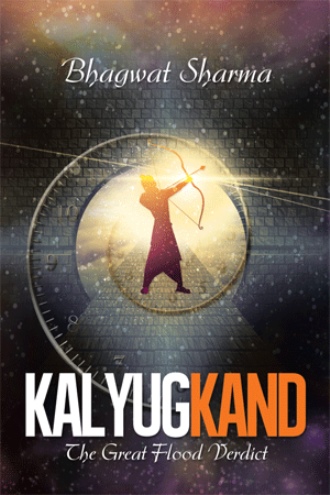
Kalyug Kand is an epic poem in English, about three hundred pages long. It comes in rhyme and rhythm, like Hindi poetry. English poetry doesn’t come like this. All of its characters are taken from Ramayana. These characters, while speaking in their roles as per episode from Ramayana, in between start speaking of what is wrong with today’s world. This book does not fall into any known category of books. The revelations of this book are not available with the world of scholars. It shows that the world governments’ fight against extremism and terrorism is like fighting flood with firefighting equipment. It tells the extremists and terrorists that they do not know their aims, and what they have taken up is not the question of weapons. The book is written in seven chapters, but its theme is not divided in chapters. It takes up the question of governance of public life and traces its genesis to Rig Veda and Old Testament.
About the Author
Bhagwat Prasad Sharma was born on 18 November 1936, in the hilly town of Dehradun in India. He has always had a passion for writing poetry. An introvert by nature, he has used both Hindi and English languages to express his innermost thoughts. He wrote one of his earlier poems in the 1960s, when he was deeply affected by a famine in India. He believes that if prose is the heart of literature, then poetry is its soul. An eminent civil engineer by profession, he considers himself a poet at heart. He has devoted himself completely to writing on his postretirement in 1996. His contributions were published in local journals. He now lives in Kalimpong, a suburban hill station in the Darjeeling district in India. He has taken to bed after a fall in last November and can barely speak or write anymore. He lives with his relatives and is being cared for by Anju, his daughter-in-law. People close to him fondly refer to him as the walking-talking English dictionary. It has been his lifelong dream to publish his book, for which he has dedicated his life postretirement. He rarely used the Internet to research the material for this book. He has worked on this book for at least ten years, for which he has spent ample time on researching and perfecting the content day after day and even burning the midnight oil. The book started off as a prose, and he has then converted it to poetry in 2007. Most of the prose material is still present in his computer. He is deeply inspired by “Bharat Milap,” which is a section in the Hindu epic Ramayana, and at one time, he knew it by heart. He has done extensive research on various faiths and is an ardent reader of the Old Testament. This work is greatly inspired by the Ramayana and the Bible.