
Addiction Tools for Recovery
Pocket Size Tools for the Recovering Addict and Alcoholic
by
Book Cover & Preview Text
Formats

Book Details
About the Book
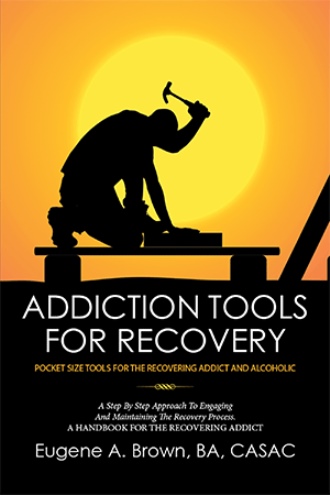
Tools for Recovery is a recovery tool book designed to help people who suffer from the disease of addiction. It opens discussing how people start the process of recovery and traditional points of entry to the recovery community. It discusses how an addiction can only exist in the absence of structure, discipline, responsibility, and unresolved inner conflict. Tools for Recovery simplifies known recovery concepts and rituals practiced by recovering persons, often for the rest of their lives. These tools, practiced daily, serve as building blocks for maintaining abstinence from active addiction. Tools for Recovery presents several stories of persons who now live drug/alcohol-free lives and who continue to practice the tools outlined in this book. Finally, there is a discussion on repairing relationships damaged as a direct result of drug/alcohol dependence. Here the recovering person is encouraged to seek to understand first then identify ways to resolve the wreckage of the past.
About the Author
Eugene Brown is a proud graduate of the College of New Rochele. He has worked as a substance-abuse counselor for more than thirty years, splitting his time in hospitals, detoxification centers, therapeutic communities, and various group homes. Additionally, Eugene Brown is himself a survivor of the disease of addiction. “I was motivated to write this book because countless individuals are discharged from various treatment settings and told only to ‘attend a meeting’ as their primary source of support. However, those of us who have maintained abstinence over a period of years fully understand recovery is much more than simply attending self-help groups.”