
Being and Conversion
by
Book Cover & Preview Text
Formats

Book Details
About the Book
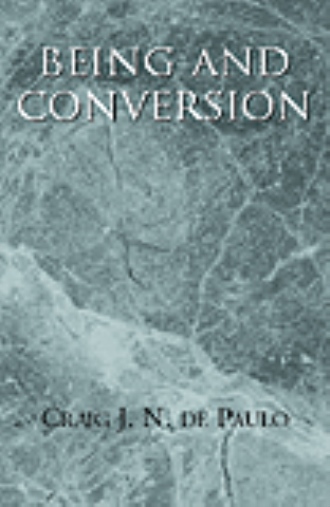
Being and Conversion is a significant contribution to philosophy and theology, and especially to the phenomenology of religion and the scholarship surrounding Heidegger´s philosophical debt to Augustine. In his groundbreaking 1995 doctoral dissertation at the Pontifical Gregorian University, the author was the first to argue that Martin Heidegger´s 1927 classic, Being and Time, has an "Augustinian Constitution" by tracing the historical and hermeneutical influences of Augustine on Heidegger and his magnum opus. It also develops an original synthesis of Heidegger´s methodology with Augustine´s thought on restlessness and conversion in order to further demonstrate their philosophical compatibility while founding a new field within the discipline that the author has termed as "Augustinian Phenomenology." Being and Conversion should be read by anyone seriously interested in phenomenology and the connection between Augustine and Heidegger.
About the Author
Gregorio C. J. N. de Paulo is Distinguished Fellow and Research Professor of Philosophy at the Collegium Augustinianum.
As an historian of philosophy, Professor de Paulo's scholarship is specialized in the development of Western (Christian) intellectual tradition from Late Antiquity to Contemporary Continental philosophy centered on the ancient Christian writer, Augustine, and his influence on the contemporary German philosopher, Martin Heidegger. He has also published extensively on intersections between Philosophy, Theology, Humanities and Intellectual History, Existentialism, Phenomenology, Philosophy of Love, Philosophy of Religion, World Religions, Ethical Theory, Just War theory and Military Ethics. He has also published on the concept of ambiguity concerning Western and Eastern intellectual identity, reflecting the Latin and Greek aspects of the Roman Empire and on the Imperial writer, Ioannes Lydus, and Late Roman antiquarian scholarship at the Court of Emperor Justinian at Constantinople, and Byzantine studies.