
A Technology for the ‘Base of the Pyramid’
Green biotechnology in the eyes of a scientist, a social researcher, a consumer
by
Book Cover & Preview Text
Formats

Book Details
About the Book
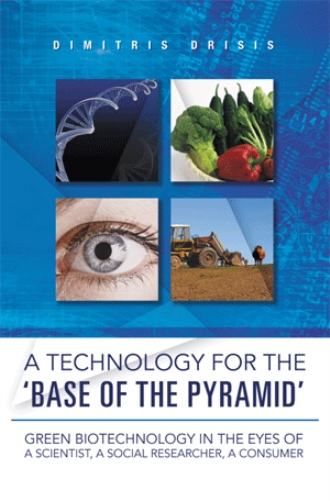
A reader on Plant Biotechnology can see most of the publications rotating and repeating the issues around Food Safety, Regulatory and Public Policy and the role of capital in their support and development. The originality of this work stems from the view that looks Plant Biotechnology in an optimistic manner and through the spectrum of an old social theory where science and public interest coexist in a harmonious way. It is informative on the social role of Agricultural Technology to feed the world, but also provides to scientists and managers in the industry an applied way to solve ethical dilemmas with the introduction of a new technology.
About the Author
Dimitris Drisis was born in Kavala Greece in 1969,
fi rstborn of 3 children. His early exposure to Malthusian
Economics by his father, the social role of agriculture
to feed a growing population, his affi nity to nature
and his fascination with the work of Norman Borlaug
created the right motivation mix to study Agronomy, unusual for an city
boy. His Postgraduate studies were in Masters Business Administration,
Postgraduate qualifi cations in Marketing Management and Doctor in
Business Administration with a doctoral thesis in the technology vs. society
interaction using the profound and popular example of Agricultural or
Green Biotechnology.
His studies and professional life developed his pro-science and pro-capital
professional attitude. His favorite quotes from Schumpeter “capital is not
to provide silk stockings to the queens of the world, but to the factory
girls” and Albert Einstein that “I never think of the future, it is always close
enough” defi ned his economical beliefs on the role of corporations to plan
timely and develop technologies that increase the social welfare.