
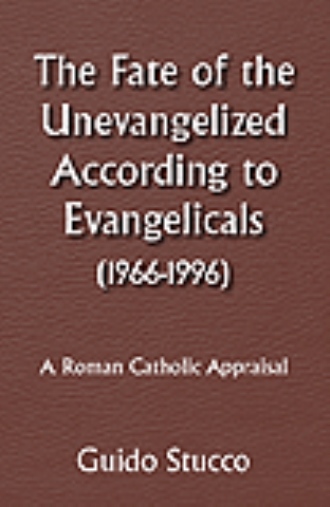
The Fate of the Unevangelized According to Evangelicals(1966-1996)
A Roman Catholic Appraisal
by
Book Cover & Preview Text
Formats



Book Details
About the Book
Beginning with the Wheaton Congress (1966), a debate arose among evangelical theologians in regard to the fate of the unevangelized. Some progressive evangelicals (Pinnock, Sanders, Osburn) began to question the traditional view of many of their fellow believers, and called for a radical re-interpretation of Scriptures on this issue. A response from conservative theologians such as Sproul and Nash soon followed. As a result, a polarization ensued between exclusivists (those who claim that the unevangelized are lost), and inclusivists (those who argue that there is hope for the unevangelized). The purpose of my book is to trace the history of this debate between evangelical theologians and to offer a theological interpretation of it from a Roman Catholic perspective. I am aware that many books have been written on this subject. However, I claim that mine is not just another book on the subject, for I believe that it makes an original theological contribution on three accounts: 1) I have discussed the issue not from an apologetical but from a historical point of view, trying to inform rather than to vie for the “truth.” The debate on the fate of the unevangelized is an interesting stage in the history of American evangelicalism, and it needs to be documented. 2) I have linked the views on the fate of the unevangelized with the cardinal doctrine of justification. Although my book presents a useful review of the biblical texts employed in the soteriological controversy, I argue that this issue ought to be analyzed not only in the light of Scriptures, but also in the context of both Theology and Tradition. 3) In my book the readers will find an irenic and concise presentation of the Catholic doctrine of justification and of some Catholic views on the fate of the unevangelized. I believe that evangelicals need to be more informed about Catholic theology. Usually, a few biblical verses and short quotes from this or that Catholic council are employed by some evangelicals to discredit Catholicism and to condemn its “unbiblical” and “heretical” views. By introducing evangelicals to some aspects of Catholic theology, I hope to contribute to make better critics of them. There is another reason why the readers will find references to the Catholic doctrine of justification. I claim that by embracing an optimistic perspective on the fate of the unevangelized, evangelical inclusivism has abandoned the Reformed view of justification by faith alone (sola fide) and ipso facto embraced the Roman Catholic view of justification by faith informed by love (fide formata). One final consideration. At the end of 1999, Lutheran and Catholic leaders signed an historic agreement concerning the doctrine of justification. This controversial and unprecedented step generated an uproar in the evangelical community. Some books and articles were and will no doubt continue to be written, either condemning or denouncing the agreement. My book differs from them because it is not bent on trying to establish whose doctrine is right and whose is heretical, but rather on comparing and contrasting views. I intend to let the reader make up his/her mind, after presenting the information I was able to gather.
About the Author
Barrilee Bannister is currently serving time with the Oregon Department of Corrections. She will be released in 2007 and plans working, living and going to school in the State of Oregon. She also intends to continue advocating for women prisoners and victims of domestic violence and rape. She is currently working on a book about the effects of incarceration on prisoners’ children.