
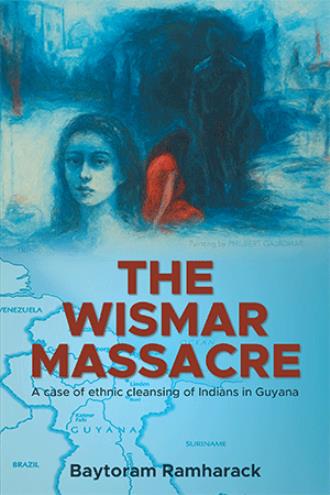
THE WISMAR MASSACRE:
A case of ethnic cleansing of Indians in Guyana
by
Book Cover & Preview Text
Formats


Book Details
About the Book
Baytoram Ramharack brings together an impressive two decades of archival research, transnational government and media document recovery, eyewitness accounts and oral testimonies, and legal and philosophical arguments to craft a gripping and sorrowful postcolonial narrative of trauma, memory, and loss that argues convincingly for the human rights framework of “ethnic cleansing” of Indo-Guyanese Wismar villagers in 1964. With a commendable focus on the voices of victims, especially women, this meticulously researched historiographic work calls for the un-silencing of “silenced history” and ultimately for clear-eyed examinations of the Guyanese past and the complex social, economic, cultural, and political relationships between Indo- and Afro-Guyanese, in the hopes of national healing. Dr. Aliyah Khan, Associate Professor of Afroamerican and African Studies, University of Michigan This study is permeated by a rigorous, scholarly, and courageous analysis of an astounding range of documentary evidence. It exhaustively explores, for the first time, a very dark event in the history of Guyana - underpinned by the intoxicating poison of racism. It was this that engendered and precipitated the apparently orchestrated barbarism at Wismar in May 1964, and (by implication) other manifestations of Guyanese savagery, by all segments, in the turbulent final years of colonial rule. Yet it is not an antidote to its recrudescence in pursuit of power, which invariably corrupts those enchanted by it. But this book may be deemed a powerful warning that no human, especially when agitated into an overwhelming sense of racial insecurity and group persecution, is ever far removed from a potential barbaric state. It should be widely read and digested. Clem Seecharan, Emeritus Professor of History, London Metropolitan University