
The Eucharist and World Hunger
Socio-Theological Exploration
by
Book Cover & Preview Text
Formats

Book Details
About the Book
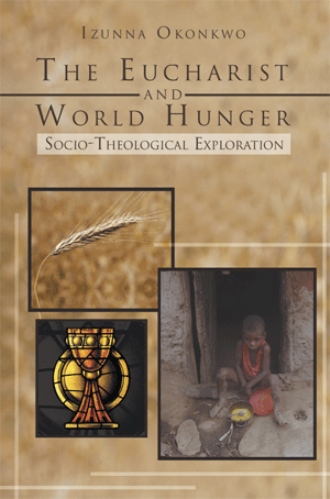
Hunger is a menace in different parts of the globe. It has more unnatural than natural causes. Though efforts have been made towards alleviating its causes and consequences, more actions still need to be taken for its genuine alleviation and eventual eradication in the world. For Joseph Grassi, ‘painful hunger is a daily occurrence that must be countered by ongoing effective programs that enter into the lives of every Christian’. Such position not only recognises the frequency and excruciating nature of hunger but also suggests that Christians and other religious groups have a very important role to play in order to eradicate hunger and its devastating effects. This book explores the nuances of hunger, its causes, dimensions and approaches, as well as its connection to the Eucharist. It argues that hunger can be eradicated and that the Eucharist stands out as a veritable model.
About the Author
Izunna Okonkwo is a priest of the Archdiocese of Onitsha, Nigeria. He holds a Master’s degree in Religious Studies, Master of Advanced Studies degree in Theology and Religion; and Licentiate in Sacred Theology (S.T.L) from the Katholieke Universiteit Leuven (KUL), Belgium. He recently obtained his doctoral degree (PhD) in theology (STD) from the same university. He researches on the transformative nature of religions, especially Christianity and African Traditional Religion. He has presented some of his research fi ndings as papers at international conferences and published articles in international journals. “The present book deserves praise for its synthetic qualities. The author has examined an impressive amount of sources and has come up with a wellinformed and solid vision. Izunna Okonkwo’s vision is that the Eucharist makes and should make a difference in the eradication of hunger. After and through this work no theologian can ever call this into doubt or content him- or herself to remain silent about this issue.” – Prof. Joris Geldhof – October 2011, Faculty of Theology and Religious Studies, Katholieke Universiteit Leuven, Belgium.