
Zebra Stripes
A Tail Of Personal Branding
by
Book Cover & Preview Text
Formats

Book Details
About the Book
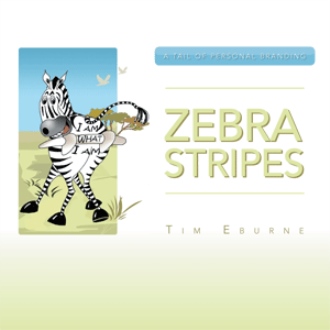
The book, Zebra Stripes, is divided into two parts. The first, which is the really unusual part, introduces the concept of personal branding through a tale about zebras, done in the style of an illustrated children’s story. The second part explores the subject in more detail, and in a more conventional but still concise and friendly style. The story that makes up part one, and gives the book its title, is set in an African safari park. It’s a funny, entertaining story that has been designed well for its ulterior instructional purpose. The principal character is Sonny, a bright, inquisitive young zebra. Sonny is peeved to discover that a certain set of animals – lions, elephants, rhinos, buffalo and leopards – commonly known as the ‘Big Five’, regard themselves as better and more important than any of the other animals in the park. Sonny consults Ziggy, who is the zebra clan’s sage. Ziggy explains that it is all to do with reputation. The ‘Big Five’ animals all have reputations that derive from some outstanding quality which they have successfully promoted. Keen to investigate further, Ziggy and Sonny bring the subject up at a zebra council meeting. It is decided that the zebras must do something to build up their reputation. They must ‘stand out’ among the other animals in the park. Their first attempts provide most of the story’s comedy, and illustrate the mistake of trying to enhance your reputation by pretending to be something you’re not. And so we get a succession of very funny attempts by various zebras to change their stripes, sing, dress up, make themselves sexy, and so on. At this point, in steps Lenny, who is apparently the zebras’ head of marketing. He explains that what is needed is personal branding, and the secret of it is to establish ‘a strong personal platform’. He explains that this is done, not by assuming new, eye-catching traits, but by ‘recognizing the special personal characteristics we already posses, that are exclusive to us and then we make every effort to emphasize or accentuate them’. Sonny is the first to jump on board this way of thinking. He canvasses other people’s views of him, considers them, and comes up with the slogan ‘I am what I am’. The story closes with the zebras having built up their reputation within the safari park. The second, more serious, part of the book, which is titled ‘Personal Branding: What Is Branding?’. This section builds on the basic concept we’ve learned about in the story. The author draws out the parallels between product branding and personal branding, and emphasizes that the latter is as important as the former. Aside from it enhancing your marketability, it will help you in your life, giving you a personal direction. This is because it is about bringing out qualities you have rather than trying to adopt ones you don’t. Also, self-branding yourself forestalls others doing it to you. This part of the book is a friendly step-by-step summary of how to brand yourself, beginning with acquiring an understanding of your ‘internal’ and ‘external’ brands – how you see yourself and how others see you. Using a fusion of these raw materials, you then synthesize your personal brand and then ‘get it out there’. Unlike product branding, you can’t do this with advertising and packaging, so you do it through how you tell people about yourself (your ‘elevator statement’ and ‘bumper sticker’) and how you live your life. This exposition is followed by three short case studies of people who have used personal branding to enhance their lives and careers. The book finishes with a final word of encouragement, and the reminder that ‘Your brand is like your fingerprint, leave it wherever you go.’ In conclusion, Zebra Stripes is an unusual and very personally branded introduction to ‘personal branding’.
About the Author
Tim Eburne has spent his whole life in the pursuit of helping others to uncover their inherent strengths and recognize their competitive edge in order to make more of themselves. Firstly in the field of education, then, over the last 10 years as a personal coach and facilitator, he has accompanied many who are stuck in “mundane”; showing them that one can enhance one’s significance and standing by building a personal message; which will be recognized and read by everyone they meet; a message of strength, competence and confidence.