
The Womanless Wedding
by
Book Cover & Preview Text
Formats

Book Details
About the Book
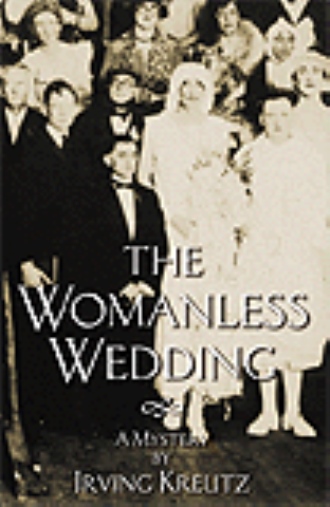
The Womanless Wedding takes place in Pecatonica, a fictional small town in southwestern Wisconsin, in the late summer of 1931. Hoover is President and the Great Depression is at its most severe. But neither of these circumstances dampens the buoyant spirits of Phillip Zimmerman, nicknamed ´Fid,´ who is thirteen years old, has just finished eighth grade and will be entering high-school in less than two weeks. What their new life will be like there is of some concern among him and his pals, but at the moment they are savoring their last few days of freedom.
Fid´s parents are dead and he lives with his maternal grandparents, who have retired from farming and moved into town. Now in their sixties, after having seen their own several offspring into adulthood, one might expect them to be resentful or at least uneasy at being burdened at this stage of their lives with the care of a thirteen-year-old boy. But so far as one can tell they accept with equanimity what they plainly regard as a duty and, on the part of Fid´s grandfather--called ´Grandad´ by his grandson--with positive pleasure. His grandmother (Gram) is deaf and it is difficult to know exactly what she thinks of her charge. She tries to be a strict disciplinarian, but by now, after some forty years at it, she has gone a bit soft around the edges.
Even though the halcyon summer days are coming to an end--only a week left--Fid still is free to go where he wants to go, do what he wants to do--with the exception, of course, of an hour in the early morning delivering papers and just occasional-ly mowing the lawn and weeding Gram´s vegetable garden.
But beyond taking care of such chores as these, just where a young boy might want to go, what he might want to do, were in those days--now almost seventy years ago--severely restricted choices. That is, Fid himself, I am reasonably sure, had no more than once or twice traveled much beyond Pecatonica, maybe a trip to Madison, the state capital, to Milwaukee perhaps to the State Fair. There were movies, although during this particular summer the theatre had been closed for the installation of sound equipment, and there was radio, which beyond Amos and Andy and Myrt and Marge didn´t amount to much. But no television, of course. So it was within the community itself that entertainment of any organized sort had to be found--or created. High-school sports were then, as now, a source of pleasure, as well as church- related activities--1lethodists, Episcopalians, Baptists, Lutherans, Catholics, all were active in Pecatonica. 4-H clubs, lodges (Elks, Masons, Knights of Columbus), book-clubs, Wednesday night band-concerts in the park--all of these and more served to draw people together.
There was however at this moment in Fid´s life, in fact in the life of every soul in Pecatonica, a special excitement awaiting them, a particular something that had never happened before and, so far as I know, never happened again. As I said, when the novel begins, it is Saturday, August 17th, 1931. At about eight o´clock on the following Wednesday evening, August 21st, 1931--well, to say that all hell will break loose is a gross overstatement, but I can tell you that on that night there on Main Street the grubby old Grand Opera House, scene normally of nothing more thrilling than the Senior Class Play, is destined to explode into color and sound--song, dance, the dramatic appearance of the most famous stars of stage, screen, and radio and--the climax!--a wedding the likes of which has never before been seen in little old Pecatonica, a womanless wedding, to be precise.
To offer just a bit of background history--it seems that in the Southwest and Midwest of this country there was, particularly in the twenties and early thirties, a fairly widespread enterprise called--yes, ´the womanless wedding,´ which was a rather ambitiou
About the Author
Born in 1917, Irving Kreutz grew up in a small Wisconsin town much like the one depicted in his novel. He attended the University of Wisconsin, went from there to Stephens College in Missouri as a librarian and from there to the U. S. Navy during World War II. He returned to Wisconsin for his Ph.D. and then was a member of the English Department at Kenyon College and on the staff of The Kenyon Review. In 1960 he returned to Wisconsin and until his retirement was a member of the English Department there. He now lives outside Philadelphia with his wife, Barbara.