
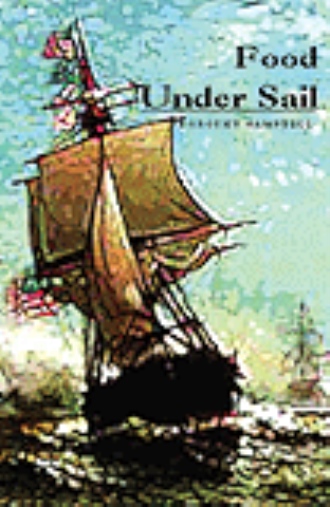
Food Under Sail
by
Book Cover & Preview Text
Formats

Book Details
About the Book
What was it like to be a sailor on one of America’s early warships?
Most of the writing about 1700s and 1800s feature the point blank mayhem and carnage of battle, the incredible courage with sword and gun of their crews and the tales of destiny of our nation depending on them.
“Don’t give up the ship!”, “I have just begun to fight” and similar quotes are familiar to school children from about the third grade on, and part of the never forgotten patriotism in our country.
The emotional scenes are the ones that we remember best.
This book features the domestic side of naval violence, principally the food that sailors ate, and also how they lived below decks in primitive conditions that were so austere as to be unbelievable by today’s standards, even though today’s seagoing standards are still Spartan compared with the luxury of shore bound living.
Food and drink were the strongest fortifiers against the elements, and harsh routine. The risks of just going out in immensely complex seagoing sailing vessels in the North Atlantic in wintertime and any ocean in stormy weather were main concerns, not to mention fortunes in battle. Even the winners in sea battles suffered damage and personal injury where medical resources were primitive and sparse.
Morale is a key military resource. It is how it was that these seagoers were sustainably motivated to survive and do battle that the author brings to life in described details of living on the sea in these marvelous sailing ships.
The moments of calm, fellowship, talk in relaxed conditions and body warmth were valued parts of the day. The daily ration of food and rum was immensely important in the respite. from work and risk. What and how they ate is given full treatment in this account of military life at sea.
In the treatment of food afloat this account includes early days’ merchant shipping, some of which were “letter of marque” warships. This sector included gentlemen volunteers and ship owners themselves, carrying with them to sea family retainers and customs including food preferences. Intead of the incredibly austere conditions aboard commissioned warships there were amenities fostered by more frequent shore contacts and the preferences fostered in a less disciplined existence. This account includes in its recipes collection many views of this in reflection of early post colonial cuisine of the American east coast.
About the Author
COLUMBUS, THE WHOLE STORY THE AUTHOR Robert Campbell, a lifetime sailor, is eminently familiar with the Caribbean. He navigated a sailing yacht on the same track as Columbus’ second voyage, from which he remembers his night watches with their glorious galaxies of brilliant stars, glinting on the dark seas around. The weather permits carrying a spinnaker continuously. Great swells overtake from astern, lifting the boat in acceleration as they pass through and ahead. Their continuous rhythm is part of existence. He saw and felt what Columbus did, over 500 years ago. He was a professional naval officer for thirty years, and later supervised construction of a 48 foot ketch in Taiwan, with Hood masts, sails and rigging from New Zealand. This craft was sailed for years as a family yacht in California and Mexican waters. Additionally he enjoyed chartering in the Pacific, Alaska, the Caribbean, Mexico and Belize, and navigated a sailing yacht from Hawaii to San Diego. He sailed many summers in Maine and adjacent Canadian waters, as well as round-the-buoy and overnight races at the Eastern Yacht Club in Marblehead. He lives with his wife Dorothy after retirement from a banking second career in La Jolla, California, within sound and sight of the ocean.