
Apocalyptic Terror and Millennial Glory
by
Book Cover & Preview Text
When visiting any tribal area, an audience with the local king at his palace is a courtesy one must not forget. On this occasion I was visiting the chief of all the Kyanga people. The Kyanga are predominantly Muslim and a Kyanga historian was called from Niger Republic to come and share his knowledge with us. The king’s entourage and other Africans were all seated on the floor, but I was given an armchair and sat next to the king. It hadn’t rained for forty days, and the local farmers were very concerned and had been carrying out some rituals to make it rain. Our host, a Yoruba missionary named Jeremiah, Levi and I asked if we could pray in the name of Jesus for rain. The king agreed, and we each prayed in our respective language. The next morning at five a.m. the heavens opened, and rain fell for seven hours. When leaving the next day, we stopped at the palace to say goodbye to the king. The last words we heard him say were to a woman standing nearby: “The Christians prayed for rain yesterday.” We travelled 150 km to the Shanga area, which was a different story. The Muslim authorities were suspicious of us and sent us 160 km to Birnin Kebbi, the State capital, to get an authorisation from the State Commissioner. That took two days. We sensed that the Lord was with us. When we entered the large town of Koko, we didn’t know where to find the ECWA church, where we hoped to stay the night. As we were driving along the main road, Levi said: “Let’s go into this household and ask.” We asked a girl if she knew where the ECWA church was, and she replied that an elder of that church lived right there in that household! He took us to the ECWA pastor and we were welcomed to stay there for the night. We found that this pastor was an agriculturalist, and that he had visited all the villages in the Shanga area. He was able to tell us the ethnic makeup of all the villages and the ones where we would find Shanga speakers. We discovered that there were about 20,000 Shanga people, with less than 5,000 still speaking the Shanga language. There was only one known Christian Shanga, a widow who had been married to a pastor. There was no Christian work being done there. Next day we went to Sakace, the main Shanga-speaking town. We greeted the chief and showed him the authorisation given by the Commissioner in Birnin Kebbi. However, he did not accept it and said that we would have to go to another town and get permission there. I suspect that he had had a phone call from the local government who had a reputation for not allowing any churches to be built in their villages and telling him not to cooperate with us. With dejected faces Levi and I were walking back to our motorbike on the edge of town, when a man approached us and asked what we were wanting to do there. I explained that we were researching the Shanga language and wanted to take down one hundred words or so, as they were pronounced in his town. He said he was a councillor in the town and that the chief was a stubborn man. The chief wasn’t an ethnic Shanga and so didn’t care about this research, it wasn’t his language. Our new friend told us to follow him and he would help us to do what we wanted. He took us behind a mosque and brought a chair for me, and soon there was a crowd of people around us. We spent an hour eliciting Shanga vocabulary and writing it down carefully in an exercise book. The chief sent messengers a couple of times to tell the councillor not to help us, but they were ignored. That night we travelled 20 km to the town of Yauri and stayed a few nights with the pastor of a church there who was happy to accommodate us. The next day we travelled to a Shanga village on the south side of the Niger River, called Kawama. It was less Islamised than the other villages. Conditions were difficult as we traversed the Niger River twice in a small canoe. Once my computer bag fell into the water, but I was able to retrieve it before the water seeped in through the zip. The chief was very friendly, and we got our wordlist done without any trouble. When leaving the Shanga area, we decided to go back to Lolo by a different route, and we planned to stay at the only church in that area, on the south side of the Niger. The village was called Shabanda. We left a bit late in the afternoon and we had to travel 40 km further than expected. The locals in these areas don’t talk in terms of kilometres. After crossing the Niger in a canoe with the motorbike, we started travelling on a sometimes slippery, and at other times sandy path, Levi was driving, I was on the back with our bags. Darkness had fallen, and then the headlight globe went out, on this track that we hadn’t travelled on before. Sitting behind Levi, I shone the torch on the track as he manoeuvred between the slippery, muddy patches and the holes causes by erosion. At 8:30 p.m. we came to a small tributary of the Niger that we couldn’t cross. Then in the light of the moon we saw a canoeist gliding silently over the water from the other side. He took us across for a pittance, and then we travelled again by torchlight until we bought another headlight globe in the next village. We arrived at Shabanda at 9 pm and were warmly welcomed by the Christians there. One man, named Haruna, killed a rabbit for our dinner and the pastor gave us a nice place to sleep. Such is the hospitality of very poor people in remote villages. Next morning, I walked around the village with a big crowd of children following. They hadn’t seen a white man before.
Formats


Book Details
About the Book
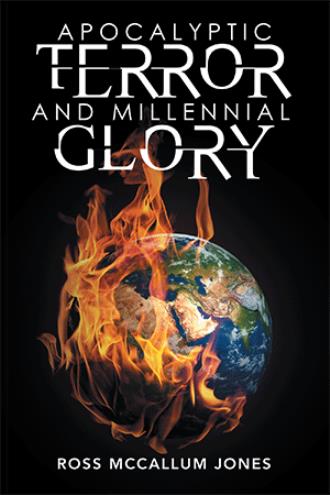
Apocalyptic Terror and Millennial Glory is a commentary on the book of Revelation; a book written to prepare Christians for Jesus’ coming and the Great Tribulation that precedes it. The series of visions is complex, but when complemented by prophetic material from the Old Testament, Jesus’ prophecies, and other Scriptures, a clear chronology is discerned. The text is divided into 80 passages which are presented in two-page studies, with Scripture on the left and commentary on the right. The text is explained clearly and naturally, emphasizing the fact that John’s series of visions is really a picture book, or a series of video clips, with much symbolism and metaphor that needs to be interpreted imaginatively, rather than literally. The Messianic reign on earth following Jesus’ return is regarded as the clear climax; glory for Jesus and glory for the saints. Evidence of a pre-tribulation rapture is scarce; rather, Revelation encourages the saints to faithfully endure persecution, even martyrdom, knowing that they have a glorious future here on earth and on into eternity. The time is drawing near. The nation of Israel is regathered in their land and recently celebrated their 70th anniversary. Globalization is increasing, the gospel is being preached in the whole world, and the 2000th anniversary of the Church is approaching. Anti-Christian forces are everywhere; secular humanism, militant Islam, Chinese and Indian nationalism. In these last days, a clear understanding of the Apocalypse is vital.