
The Doctor From The East
by
Book Cover & Preview Text
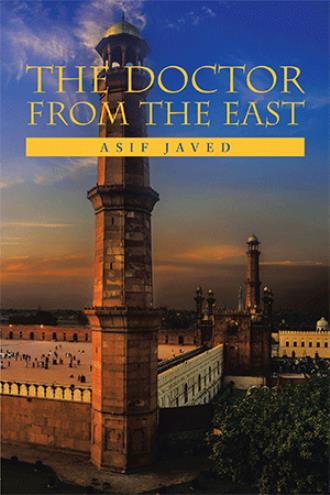
There are two kinds of men, it seems: the first kind are personified by Thomas More; they are endowed with extraordinary courage, perhaps because they have sincerity of purpose, and a supreme conviction to their cause. And then, there are rest of us. It is for the former that Faiz wrote: Jis dhaj say koee maktal mein geya, who shan Salamat rehtee hay Yeh jan to aanee jaanee hay, is jaan kee koee baat naheen ----Profiles in Courage Back in 1520, Robert Whittington, had called Sir Thomas More, a man for all seasons. There has been hardly anyone in Pakistan, who excelled in so many disciplines and deserves this title-except ZA Bokhari. One would have expected that a genius like him would be well remembered by the current generation. It is sad that he is not. Such are the times that we live in. Baqi rahe naam Allah ka. ---The Man for All Seasons “It was the best of times; it was, also, the worst of times," writes Charles Dickens in The Tale of Two Cities. Dickens was writing of the reign of terror that had taken over Paris during the French Revolution. But the great story teller might, as well, have been referring to Pakistan. But a well-planned, properly executed action, like the one by Sultan Mahmood 2nd, two hundred years ago, may still, change the worst of our times, to the best of our times. ---A Tale of Two Countries Some years later, Pasha's decline began, and it was relentless. Movie after movie flopped and the crowd of flatterers disappeared. One day Pasha was seen entering the same studio. There was a crowd of filmi people at the entrance. Hardly anyone noticed a subdued Pasha who quietly walked right through them. The times had changed. The successful film maker of the past had fallen on hard times. Pasha, and the others of his ilk, would have been well advised to remember the following verse from Surah Al-Isra: And walk not on earth with haughty self-conceit; for verily thou canst never rend the earth asunder, nor canst thou ever grow as tall as the mountains. ---The Arrogant Ones Duke of Wellington had once described the men under his command as "the scum of the earth". He had the reputation of being reserved and aloof. Years later, as he lay dying, he was asked if he had any regrets. The former PM of Britain, who had defeated Napoleon, named one: "I regret not having thanked the men who put their lived on the line for me." The Iron Duke's perception of life, and the people around him had started to change as he approached the abyss! ---Of Death and Dying Quaid-e-Azam, the master of cold-blooded logic, a man of iron discipline, who as a young man had ignored the temptations of London, made a terrible choice of a wife, and paid a heavy price, as did his future generation. It seems mind-boggling. Perhaps Henry James was right when he wrote: Never say you know the last word about any human heart. ---Quaid and Ruttie Decades have passed since Urmila Sondhi created sensation in Lahore with her flirtation, and subsequent marriage, to an already married Prof. Siraj. It was a huge scandal at the time. But the cruel sponge of oblivion has since removed its characters from the slate of history, and now hardly anyone remembers it. ---The Lady in the Lodge In the heart of London, lies Trafalgar Square with the column of Lord Nelson, one of the great heroes of England. Before the naval victory at Trafalgar against France that saved UK from invasion, his last signal before the battle said: "England expects that every man will do his duty." In the Gettysburg address, Lincoln paid tribute to the fallen soldiers "who had given the last full measure of their devotion to their country." Should Quaid's Pakistan not expect the same from us? ---What is wrong with us? Rahmat Ali died in neglect, indifference and apathy. No Pakistani brought him to the hospital, or sat near his bedside, or called to enquire about him, or prayed for him, or mourned him, or took hid dead body away. Rahmat Ali occupies the same place in Pak ideology as does Karl Marx in communism. If there is any difference in their position, it is that while the people who profited from Marx's intellectual labors remembered him, those who gained from Rahmat Ali's intellectual exertions have forgotten him. His soul demands, and deserves, an explanation for a glaring injustice. It is long overdue. ---Rahmat Ali: The Condemned Hero Thomas Jefferson once wrote that the art of life is the art of living with pain. Like the great American statesman, father too carried on in life despite many personal tragedies. He personified a life of discipline, hard work, and dedication to his family, community, and his profession. He played his part on the world stage, as the bard from Stratford once wrote. And when the time for exit came, he gently slipped in to the night without much fuss. That was my father. ---My Father: The Aligarh Man
Formats

Book Details
About the Book
Good writings defy time and immediate surroundings to sustain their appeal. The entrancing aura of a well-knit article or story is lasting. Surely, Hardy's rustic Tess or Jude couldn't be out of sync in the year 2020 for technology savvy readers obsessed with Instagram, Twitter, Facebook and accompanying high-tech spinoffs. Without being extravagant with words, one may say the same is true of Dr. Asif Javed's writings. Insightful and instructive, they are studded with revealing facts that are well documented to testify to the innate truth. The gifted writer tells us of the life and time of the Bronte Sisters, Ibn Batuta, Leo Tolstoy, Rudyard Kipling, Nawab of Kalabagh, Zulfiqar Ali Bhutto et al. In more ways than one, the articles remind the reader of Dale Carnegie's 'Little Known Facts about Well-Known People'. Today, he is one of the most fluent and readable purveyors of the English language in the Pakistani American community. His writings have ranged from Punjab politics to port-partition Indian cinema, to English literature, to the Tsarist wars in Dagestan. All the time, he manages to convey, seemingly dense subjects in a seamless flowing style, making his writings a treat to read.