
Stripped Windows
by
Book Cover & Preview Text
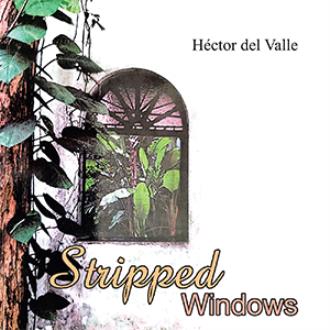
From the Prologue Plantain tree I owe you the stain, That neither the soap nor the iron Can take away from me Since I was born “jibaro” In the air, I carry the treasure Of your golden bunch of bananas And your wide green leaf, I will always carry your stain Per secula seculorum. I feel proud of my humble roots. I will never deny where I was born, not in a hospital surrounded by machines, doctors, nurses, white sheets, and pillows, but in a simple house made of wood and zinc, assisted by a “comadrona” with coarse hands who laid me on a white canvas hammock hanging with ropes and tied up to the corners of the living room. There was the last moaning begotten child of the family. There was my tiny swinging body while in the home’s yard, the tender plantain trees were also growing and swinging their greenish wide leaves with a voluptuous rhythm and offering me a welcoming to the rural world. They were also ready to give birth bunches of plantains for the nutrition of the newborn child. They were going to place on me the royal blood stamp of Africa, of Spain, and of the Tainos: the plantain stain. Both the native “reinita” and the “ruiseñor” were singing their best songs from a nearby mango tree as a tribute to the newborn. The famous “pitirre” was at the top of the royal palm athena while watching for the enemy: the native hawk. The “guamá,” “árbol madre,” was tenderly casting its warm shadows over the coffee trees, which were already showing its coral red beans and getting ready to offer them to be picked by the hands of the family. They were going to be dried while being exposed to the heat of the sun in the “batey”, toasted in the “cazuela,” ground in the “molinillo,” and served as a daily breakfast drink called “café.” My story has windows, Some are small, Some are open, Others, semi-open, Some are sealed, And only the pain Of the author Feels them, ‘ Smells them, Hears them, Opens them, By pressing. Windows that have been super closed That others think they never existed, That they can not conceive them. But they exist, And they existed, Making idiosyncrasies, Making paths, Small paths, long paths, dark paths, Footpaths, secret shortcuts. From Chapter 5 Going up “The Cabrito” hill and down Highland Avenue There were for students: two girls, Sofia and Vivian, and two boys, Fidel and José. These last two were brothers. They lived in “El Cabrito,” located in the mountains of Mariana. Mistrust and shyness were merged in their looks, but a soft expression of happiness was perceived in front of the newly neophyte teacher that just arrived. And there I was, the “guajino,” the babyface, the last born to Ramón and Tunila, the one, who, at an early age, started to dream of becoming a teacher, the “campesino,” the “jíbaro,” the one, who, as a child had probably the same experiences of these four: playing outside when it was raining while being naked, taking care of the cattle, sinking our feet in the mud, sliding down the hill on a “yagua” as a sleigh, climbing up the trees, looking at the stars at night, enjoying the sweetness of the mango, the “fresas,” the guavas, the cashew apples, lemons, “chinas,” june plums, “maricaos,” “cherimoyas,” and so many tropical fruits from Puerto Rico. From Chapter 6 Eating from small boxes on the other side of the world An experience during our ambushes in the frontline made me feel very uncomfortable and somehow an inside wailing being part of a group of soldiers who under orders of a captain and a lieutenant did not show respect for human dignity. We arrived at a small village to set up a security perimeter to spend the night and to wait for a large company of enemy forces that were nearby and to start an attack. There were two shacks made of straw next to each other with two mothers and their respective small children. A questioning started with the help of a translator to find out where their husbands were. Both mothers refused to give information while repeating: “I do not know” in Vietnamese. In face of their negative attitude, one soldier, under the approval of the officers, started to rip the clothes of one of the ladies. He started with the blouse while two other soldiers pushed her to the ground while one was holding up her arms. Her breast was totally exposed and her face was full of shame for the terrible humiliation. From the Glossary 1. Árbol Madre - A metaphor for the “guamá” tree that grows casting its shadows over the coffee tree like a mother 2. Batey - Name of the surroundings of the countryside homes 3. Campesino - Countryside person 4. Cazuela - Clay pot 5. Cherimoyas - Custard apples. Also called “corazones” 6. Chinas - Oranges 7. Comadrona - A lady who assisted mothers in delivering babies in rural areas 8. Fresas - Puerto Rican strawberries 9. Guajino - The last born from a female pig 10. Guamá - Exotic white fruit that grows inside an acorn 10. Jíbaro - Rural Puerto Rican with distinctive dialect and customs 11. Maricaos - Nance fruits 12. Molinillo - Coffee grinder 13. Reinita - Puerto Rican Amazona vitatta. The national bird of Puerto Rico 14. Ruiseñor - Common nightingale 15. Yagua - The part that holds a real palm tree leaf to its trunk
Formats

Book Details
About the Book
“Stripped Windows” is the revised and enhanced translation of Del Valle’s first book “Ventanas desnudas.” His autobiographical account begins with a tribute to the plantain tree as a symbol of his humble roots. He uses the personification of this plant and perfectly blends the movements and sounds of the surrounding trees and birds welcoming the newborn. Then, using the free rhetorical style verse, he persuades us to go on a journey through six windows resembling a partial story of his life as a child, with a particular connection with the family cow “Ojinegra;” as a student in a rural school, he has the experience of platonic love for his beautiful cousin; as the last child, he has a close bonding with his mother; as a brother, he deals with ten more siblings; as a rural and urban teacher, he leaves footprints in children and youngsters; as military, he goes beyond the call of duty implementing his medical abilities.