
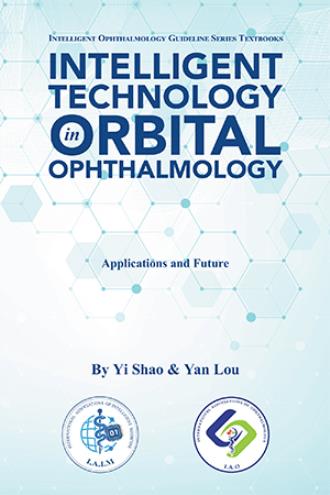
Intelligent Technology in Orbital Ophthalmology
Applications and Future
by
Book Cover & Preview Text
Formats


Book Details
About the Book
“Intelligent Technology in Orbital Ophthalmology: Applications and Future” is the core volume of the guideline series “From Ocular Surface to Fundus: A Guide to Intelligent Technology Applications” (6 Volumes in Total), focusing on the theoretical innovation, technology transformation, and clinical practice innovation in the intersection of intelligent technology and orbital ophthalmology. It systematically presents the development paradigm and evolution path of this discipline in the digital age. This book is based on the anatomical characteristics of the orbit and the diagnostic rules of diseases, comprehensively reviewing the core principles and development trajectories of cutting edge intelligent technology such as artificial intelligence, multimodal imaging analysis, surgical robots, and natural language processing. From the perspective of clinical application, it deeply explains the specific implementation paths and technical key points of related technologies in the precise diagnosis of orbital tumor, thyroid eye disease , orbital trauma, optic nerve sheath meningioma, etc. (such as orbital lesion segmentation and benign/malignant differentiation based on convolutional neural networks, quantitative assessment of ocular surface signs), personalized treatment plan optimization (such as artificial intelligence-assisted surgical planning, 3D printing of customized prostheses), and long-term prognosis management (such as disease progression prediction based on longitudinal data, dynamic monitoring of postoperative complications). The book integrates multi-center clinical cases and evidence-based medical evidence, systematically analyzes the implementation difficulties in the clinical transformation process of intelligent technology, the multidisciplinary collaboration mechanism, deeply discusses key issues such as data privacy protection, algorithm bias prevention, and clinical ethical norms, and conducts forward-looking prospects on future development directions such as interpretable artificial intelligence, multimodal data fusion, and cross-institutional diagnosis standardization. It provides academic references with theoretical depth, technical details, and clinical guidance value for ophthalmologists, medical engineering technicians, and researchers in the field of intelligent healthcare, helping to promote the development of orbital ophthalmology towards precision, intelligence, and standardization.